Writing the Definitive Guide For Using an iPhone With a Bluetooth Keyboard
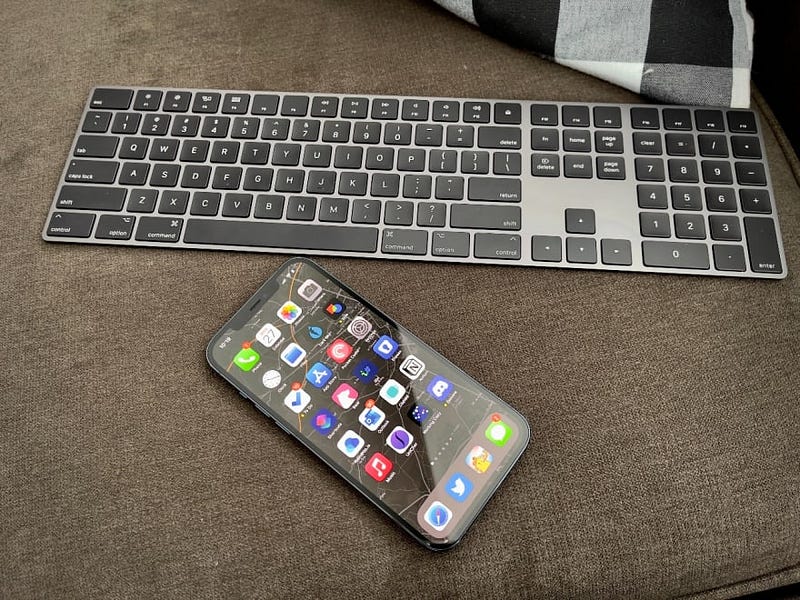
When I graduated high school in the Spring of 2012, my mom offered me a choice: I could go to Community College with a new laptop, or a new iPhone. I was still on the kick that’d started with my first-generation iPhone, four years earlier, and decided to take the bet. Instead of a new laptop, I entered my first vaguely-collegiate experience armed with an iPhone 4S and an original Magic Keyboard, beginning an experiment that’s more-or-less ongoing (there have been intermittent pauses, notably.)
Over the years since, I have accumulated a lot of evidence to suggest that number of iPhone users who’ve used a hardware keyboard with their phone is extremely tiny (which I believe to be entirely reasonable and inevitable,) but I think also believe it’s a dynamic that’s still worth documenting properly. Frankly, I can say definitively that it absolutely has not been, thus far.
As you may have observed, even the association of iPad and keyboard in the past few years has actually made it worse — lookup any given iOS app’s keyboard shortcuts and you’ll return a list for iPad and nothing else. Over the years, I’ve maintained a habit of going down the iPad list, testing each shortcut on iPhone, noting down which of the iPad shortcuts respond on the latter in a table, and then emailing said list to the app’s developers. (Naturally, they almost never respond. Shout out to Tapbots for being the only recent exception.) After refocusing the bulk of my attention back on iOS and its adjacent communities, this year, I’ve looked around and come to a conclusion: if ever there is going to be a consolidate reference for those who regularly use a bluetooth keyboard with their iPhones, I am going to have to write it, myself.
Currently, my end target draws influence from the ebooks published by the MacStories team — like Tim Nahmuck’s Drafts 5 “Review” (which is closer to a User Manual than an App Review) — but it’s most important that it be in the form(s) which add maximum value to readers/users. In that vein, I must acknowledge that I cannot accomplish it entirely on my own, yet am fairly inexperienced with the sort of collaboration I’d imagine will be involved.
So…
If anyone would like to advise on this in any capacity, I would very much appreciate hearing from you via any method you’d like (see the info below.)
Anyone who has used a Bluetooth keyboard with their iPhone at any point, I’d actually beg you to share any thoughts/requests/suggestions you may have.
Just FYI, this hyperlink is broken. We’re 8 days out and still haven’t heard back about downloading broadcasts. Sorry to be pushy but… I feel like nobody is watching this account and there are a lot of Periscope users with questions.
I’m a fan of Shihab Meboob’s, you might say - Aviary and Mast are the most innovative social clients I’ve ever seen. I’m also a bit of a collector of text manipulation applications like Texcraft, of which there are just a few that are truly comparable on iOS. On macOS, there really aren’t any equivalents at all.
For someone like me - who uses Textcraft’s transformations both recreationally/socially and has used them in development-ish tasks - its $4.99 and featherweight 3.7 MB were/are more than worth the experience. It’s super configurable, capable, and robust.
Reclaiming tastemaking for listeners in the Spotify era.
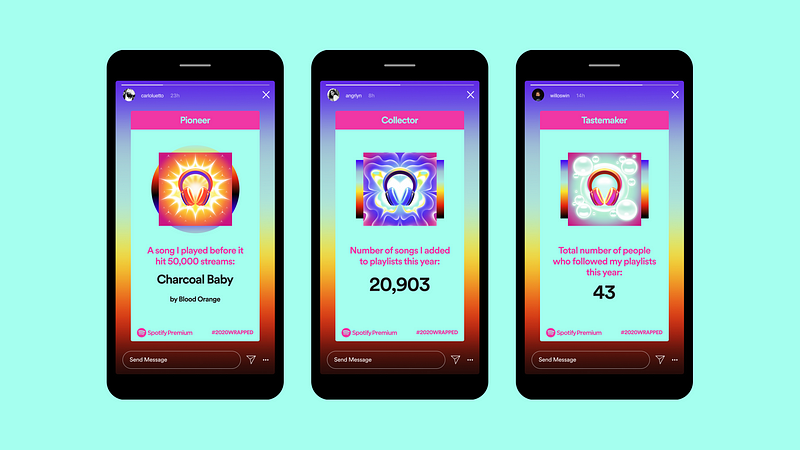
Last week, Spotify users were treated to the service’s annual “Spotify Wrapped” feature: a visual summary of an account’s listening habits throughout the year, including their most listened-to artists. New for 2020 are “in-app quizzes,” a chronological “Story of Your 2020,” and detailed podcast listening statistics. For premium users, “badges” will “crown listeners with various titles based on the ways they listened.”
For example, if a number of your playlists gained significant new followers, you’ll be a Tastemaker. If you listened to a song before it was cool (aka hit 50,000 streams), you’ll get the Pioneer badge. And based on the number of songs you added to playlists this year, you just might become a Collector.
Their use of the term Tastemaker is particularly interesting. “Tastemaking” — a function once relegated to magazines — has taken a concerning bent in the Algorithmic Age. Very much contemporary terms like “filter bubble” and “echo chamber” — applied more and more often to social platforms like Facebook and Twitter, now — can also be associated with music streaming services like Spotify, who’s “playlistification” of content has had a number of alarming effects on American culture.
New “badges” for Premium users.
In 2018, The Baffler’s Liz Pelly explored Spotify playlists’ gender bias in “Discover Weekly:”
On Today’s Top Hits, I found that over the course of one month, 64.5 percent of the tracks were by men as the lead artist, with 20 percent by women and 15.5 percent relying on collaborations between men and women artists. When all features were taken into consideration, I found that 85.5 percent of tracks included men artists, while only 45.5 percent included women. This was one of the highest percentages of women artists out of all the playlists I examined.
She also quotes a LinkedIn post by “Jerry Daykin, the Head of Media Partnerships at Diageo,” in which he observes, “The most popular tracks on Spotify get featured in more playlists and become even more popular as a result.” In January of the same year, the online music magazine Pitchfork published an op-ed by musician Damon Krukowski entitled “How to Be a Responsible Music Fan in the Age of Streaming,” which provided concrete statistics on this phenomenon (emphasis mine:)
According to the data trackers at BuzzAngle Music, [on Spotify,] more than 99 percent of audio streaming is of the top 10 percent most-streamed tracks. Which means less than 1 percent of streams account for all other music.
“While streaming media is pitched to us as tailored to our taste, or at least to our browsing history,” Krukowski goes on to note, “the business of it is in fact closer to one-size-fits-all.” Clearly, this is an issue, but technically only insofar as Spotify advertises itself as a means to discover new music, which it does consistently.
The company has faced criticism in other areas, most recently by The New Yorker’s Alex Ross in a widely-read review of “Decomposed: The Political Ecology of Music,” a new book by University of Oslo professor Kyle Devine, entitled “The Hidden Costs of Streaming Music.” Ross first cites a statement by Spotify CEO Daniel Elk, “The artists today that are making it realize that it’s about creating a continuous engagement with their fans,” arguing the true meaning of his words to be “to make a living as a musician, you need to claw desperately for attention at every waking hour.” His most original (as in, yet to be considered in the mainstream discourse) argument, though, involves the service’s environmental impact. He cites Devine’s depiction of a profound cultural delusion surrounding the consumption of music, suggesting that music is “seen as a special pursuit that somehow transcends the conditions of its production.”
In a chapter on the digital and streaming era, Devine drives home the point that there is no such thing as a nonmaterial way of listening to music: “The so-called cloud is a definitely material and mainly hardwired network of fiber-optic cables, servers, routers, and the like.” This concealment of industrial reality, behind a phantasmagoria of virtuality, is a sleight of hand typical of Big Tech, with its genius for persuading consumers never to wonder how transactions have become so shimmeringly effortless.
Also noteworthy are questions of Spotify’s viability as a business, which Ross includes by citing a July article in Barrons quoting Spotify Technology’s second-quarter earnings report: “The streaming music company lost $418 million, or $2.24 per share, versus analysts’ expectations for a 41-cent loss.” Spearheading this year’s news conversation surrounding the company, though, were its widespread acquisitions in the Podcasting industry, including Anchor, Megaphone, Gimlet Media, and — most controversially — the exclusive rights to the most listened-to property in the medium, The Joe Rogan Experience. Though details of their implications are beyond the scope of this essay, it is reasonable to assume its concerns — if not its proposed solutions — should apply to the future of podcasting as well.
Responsible Curation
For solutions to address Spotify’s overwhelming skew toward rewarding popular music with even more popularity, we can first look within its own history to just a few years earlier, when human curation was more equally matched in its fight against algorithmic curation. In 2015, the company claimed that “Half of Spotify users stream from other users’ playlists at least monthly.” Pitchfork’s Marc Hogan profiled a number of “power users” within the upper percentile in terms of followers and personal playlist popularity. Notably, all of his examples are male.
Generally, human curation should hypothetically combat its algorithmic counterpart in terms of favoring already commercially successful content, if not its gender disparity. The industry’s other biggest player, Apple Music, has invested heavily and successfully in the former. (Disclosure: I have been an Apple Music subscriber since its launch.) Fast Company addressed this contrast in a 2018 long read entitled “Spotify’s $30 billion playlist for global domination:”
Cook’s words embody Apple’s longstanding critique of Spotify, which is that its algorithms are eroding music’s spiritual role in our lives. Cook doesn’t mention Spotify by name but says, “We worry about the humanity being drained out of music, about it becoming a bits-and-bytes kind of world instead of the art and craft.”
Then again, the same article also quotes Tim Cook — the CEO of the most valuable company in the history of the world — as insisting “We’re not in it for the money.” In turn, Daniel Elk is quoted, saying “Music is everything we do all day, all night, and that clarity is the difference between the average and the really, really good,” though what exactly he is quantifying as “really, really good” is not entirely clear. In context, the words of both leaders seem untrustworthy — vague, at best.
In tremendous and relevant contrast to the voices of these CEOs is that of Ethan Diamond, CEO and co-founder of Bandcamp, a music streaming service unlike any other. In an interview with Music Tech Fest director Andrew Dubber this May, Diamond exemplifies an entirely different mentality in running a for-profit service for independent music artists.
In 2007, Diamond and former colleagues Shawn Grunberger, Joe Holt, and Neal Tucker set out to build the equivalent of blogging services like Blogger, WordPress, MovableType, etc. for musicians. As Holt bemoaned in a 2008 interview with The HTML Times, creating an online presence for one’s music had long been “a pain in the ass:”
You need to find a place to host it, you’ve gotta get the metadata right, it’s just hard. So we just decided we would do that hard part for musicians so that they didn’t have to be so nerdy.
We keep your music streaming and downloading quickly and reliably, whether it’s 3am on a Sunday, or the hour your new record drops and Pitchfork gives it a scathingly positive review. We make your tracks available in every format under the sun, so the audiophilic nerderati can have their FLAC and eat mp3 v2. We adorn your songs with all the right metadata, so they sail into iTunes with artwork, album, band and track names intact. We mutter the various incantations necessary to keep your site top-ranked in Google, so when your fans search for your hits, they find your music long before they find bonkersforlyrics.com or iMyFace. We give your fans easy ways to share your music with their friends, and we give you gorgeous tools that reveal exactly how your music is spreading, so you can fan the fire.
In the years since, Bandcamp has demonstrated time and time again the sincerity in its commitment to artists through programs like “Bandcamp Fridays,” when the service waives its cut of artists’ revenue (ten percent on physical releases, fifteen percent of digital.) In 2017, the company donated a Friday’s share of proceeds to the Transgender Law Center in response to the Presidential Administration’s proposal to ban trans people from serving in the U.S. military. This year, throughout the Coronavirus pandemic, the company has repeatedly brought back the program in recognition of its impact on independent artists, and the results have been profound. On March 20th, for a specific example, $4.3 million worth of purchases was distributed.
Unlike Spotify, Bandcamp is a profitable company, and has been for nearly a decade. In Dubber’s interview, Diamond explains their financial origins:
In 2007/2008 we took a little bit of VC funding and then focused on getting to profitability. So we did that and got there in 2012, and that’s helped us maintain the mission, maintain the vision that we’ve had for the company for a long time.
Also in contrast to Spotify, Bandcamp explicitly invests in less popular, fringe content, through its online publication the Bandcamp Daily:
The mission of the Daily, it’s our editorial arm, and it’s just to highlight this incredibly diverse world of music that’s on a site where anybody can upload anything. And the result of that is that you have weird subgenres and a lot of music, I think, that wouldn’t necessarily be covered anywhere else.
Bandcamp has long demonstrated an anthesis to the business models technology companies have been so criticized for upholding and has done so in relative obscurity from the media. In his interview, Dubber asks Diamond one of the primary questions prompting the creation of this essay: “how come Bandcamp doesn’t get mentioned in all these press articles about music services?” In answer, Diamond offers his own business decisions out of “[his] personal preference:”
I like the idea that Bandcamp hangs out in the background and just makes all of this stuff work, and also, hopefully, helps the artist promote themselves, and it’s not about “Bandcamp, Bandcamp, Bandcamp.”
As a Tastemaking enterprise, Bandcamp has combined magazine-style editorial publishing with user-created content in the form of Collections — which allow listeners to display music they’ve purchased on a customizable web page — and Artist Recommendations, which extend from a creator’s Collection to those who follow them. This system has demonstrably lead to community and cultural wellness by genre via responsible commentary and selection from curating creators with authority, while still profiting its parent company tremendously. Bandcamp has grown from four to seventy employees in its 13-year lifespan, while helping artists earn $634 million as of December 2020. In the music industry, it is unquestionably an outlier. Diamond inadvertently explains Bandcamp’s success in response to a question from Dubber on the company’s comparatively slow pace in terms of technological features (emphasis mine:)
Deciding what to work on next, that has always felt like the easiest part of the job because it’s whatever benefits artists the most. Because the way Bandcamp makes money is if artists make a lot more money, so that’s what we try to spend every day doing.
The solution to the “debacle” of streaming music, then, is not necessarily charity or socioeconomic revolution. It would seem that all it takes is a sincere investment in the real people who create music.
I am so fucking sick of Freedom. Freedom sucks. Freedom doesn't work. I'm tired of trying to figure out what I'm supposed to be doing. PRISON would be refreshing!!!
swap me out for a family of immigrants. it is long past my turn to serve some time.
you are all screaming about how you feel your "Freedom of Expression" is in danger so much that it has become the entirety of what you have to express. am I really gonna have to be the one who shuts you up?
here's a VC pitch that actually aligns with the public interest: give me $20 million and I will erase the digital presence of hate groups on the web within 18 months via weaponized DDoS. the free exchange of ideas has fucking failed dude. it's time to try a muzzle.
the UK doesn't have these issues. their response to the WBC? *banning them from the country and blocking their website* cbsnews.com/pictures/banne…
somehow "Personal Freedom" equates to "you must give me what I want or you're breaking the law."
sorry I'll stop...
i just don't know how folks continue to dwell on these ridiculous abstracts from 250 year old documents. they should have been allowed to turn to dust.
Notably missing from both the film and this interview: not only have these issues been discussed and researched for decades, now, but a biome of alternatives to EVERY SINGLE CRITICIZED COMPANY/SERVICE EXISTS and HAS EXISTED for years. bit.ly/3fd3Xxn
there is a search engine that is basically just Bing except most of the profit generated by the adtech goes to PLANTING TREES. (Ecosia)
there are decentralized social networks (Mastodon, Diaspora) that often OUTPERFORM the proprietary big boys because they're still incentivized to craft the HIGHEST QUALITY experience rather than the most lucrative.
the only reason you haven't heard of them is that the Big Bad Monopolistic Incs OWN AND OPERATE the tools you'd normally rely on to search them out and Tech Journalism has literally moved in with the people they're needed to keep in check. (they all live in California)
it's ridiculous that we're still listening to the people who created the problem as they ruminate on solutions to the problem. (I would've just commented on Medium, but OneZero is paywalled so... sorry.)
and uh yeah... once again, I did my best to articulate these arguments and more in my most recent Post. bilge.world/the-social-dil…
The pop culture discussion of tech’s greater issues missed in (at least) two major ways
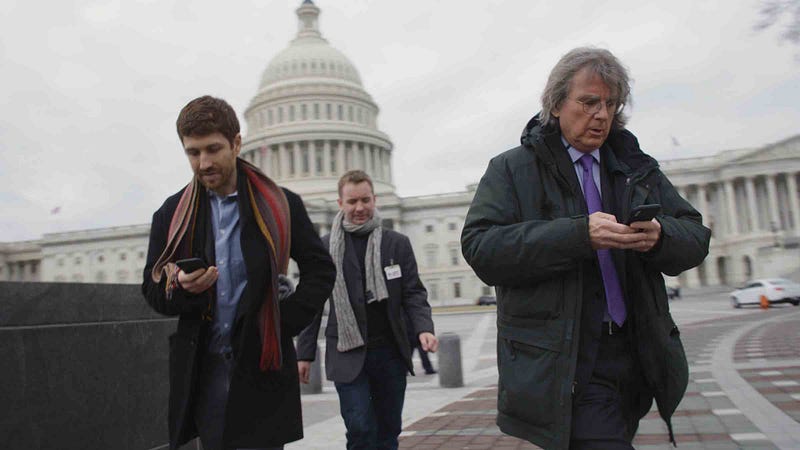
For those of us who’ve written about technology, generally, for quite a long time, any injection of the broader metaphysical/”ethical” conversation regarding the impact the industry has had/is having/is expected to have on our species into popular culture is inevitably an emotional event. The Social Network had an almost comical disregard for any potential function as a substantial critique of its subjects. Not that it’s particularly supportive of that argument, but Mark Fuck, himself, recently said in court, essentially, that he didn’t know what the movie was about. I’m not particularly sure, either. I suppose the dramatic film industry has no particular obligation to be critical of the times, but documentaries certainly should, in my estimation, and The Social Dilemma could’ve done better, in that regard.
First, the actively misleading: As thoroughly as I enjoyed Peter Campbell’s casting as the master-manipulating triplets behind the dramatized young man’s screen, the film’s depiction of this very human invasion of privacy is blatantly false imagery. The Privacy Problem is not that Facebook or Google employees are directly and actively viewing and manipulating your use of their services in real time. In fact, it is ridiculously unlikely that human eyes will ever see your individualized information. One could go so far as to describe the whole film as “ridiculous,” as did one of my favs, Casey Newton:
The dramatized segments include a fictional trio of sociopaths working inside an unnamed social network to design bespoke push notifications to distract their users. They show an anguished family struggling to get the children to put their phones away during dinner. And the ominous piano score that pervades every scene, rather than ratcheting up the tension, gives it all the feeling of camp.
The Verge’s official review of the film — written by Adi Robinson and as cited by Casey — is an important read, as well. Robinson makes use of some very intelligent language and cites some very interesting bits (including a Wikipedia article about a series of Hogarth paintings?) for The Verge’s audience, who already knew all of this. What I hoped to do by writing about this at all was speak to those distinctly separate tech media — grandmothers, retirees, etc. — who are both directly affected by the subjects covered by The Social Dilemma and particularly susceptible to its delusions about “privacy” — a term which I would argue is not particularly relevant to the conversation. Personally, I define my privacy in a way that is not violated by the simple collection of “my data,” regardless of how detailed said collection may or may not be, but would be by individual examination with human eyes, which — while possible — is extremely unlikely if for no other reason than a lack of business incentive. While Google may have access to the data it would need to determine whether I am currently showering or not, there is absolutely zero monetary gain to be had in one of its employees (or outsourced contractors) knowing this.
Now, on to the notably missing: Perhaps most important to note before I go on is that the film was produced by — and directly promotes on several occasions — one particular organization, called the Center for Humane Technology, which notably has a .com rather than a .org domain… hm. Immediately after watching the film, I complied with its direction to its website, where I was specifically looking for “solutions” to the issues it presented. Aside from Wikipedia (sortof,) it neglected to mention the abundance of alternative organizations and projects who’ve been building against the adtech-funded web for ages — some for decades. Unfortunately, neither the organization’s website nor the film’s webpage list any of these alternatives, whatsoever, which personally leads me to believe the whole thing is bullshit, for lack of a better term.
The film essentially argues for a single choice: using social media and other adtech-sustained services, or not using them. What I’m here to tell you: you have a choice of services. For every single individual service criticized in the film, I guarantee there exists at least a handful of alternatives across a spectrum of sin. If you’ve followed my work for any length of time (you probably shouldn’t still be reading,) you know I’ve advocated exhaustively for Mastodon — the open web, decentralized social network outpacing Twitter in every single way. Two years ago, I spent an entire summer arguing that Bandcamp is the only music streaming service who’s business model benefits both platform and artist. I’m still finishing up a massive essay that discusses alternatives to Facebook, which has been an exhausting but educational journey, as you can probably imagine, namely that leaving a platform as all-consuming as Facebook for an open-source and/or federated alternative requires a certain amount of bravery. Essentially, the evidence suggests that the alternatives discussion is a particularly important one to me, as is finding a way to evangelize it that isn’t immediately off-putting to “the average person.”
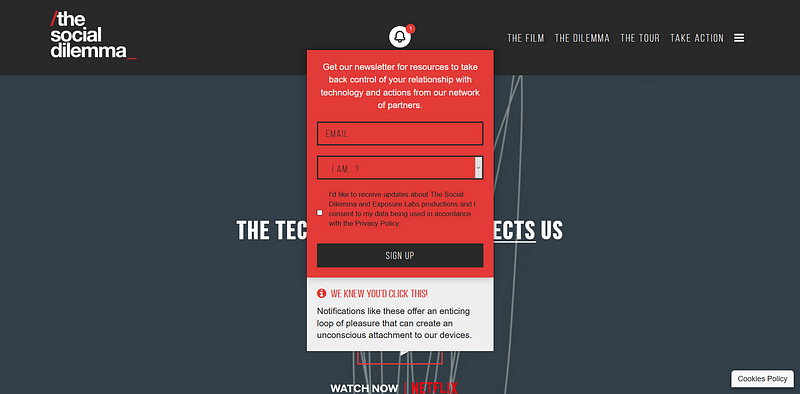
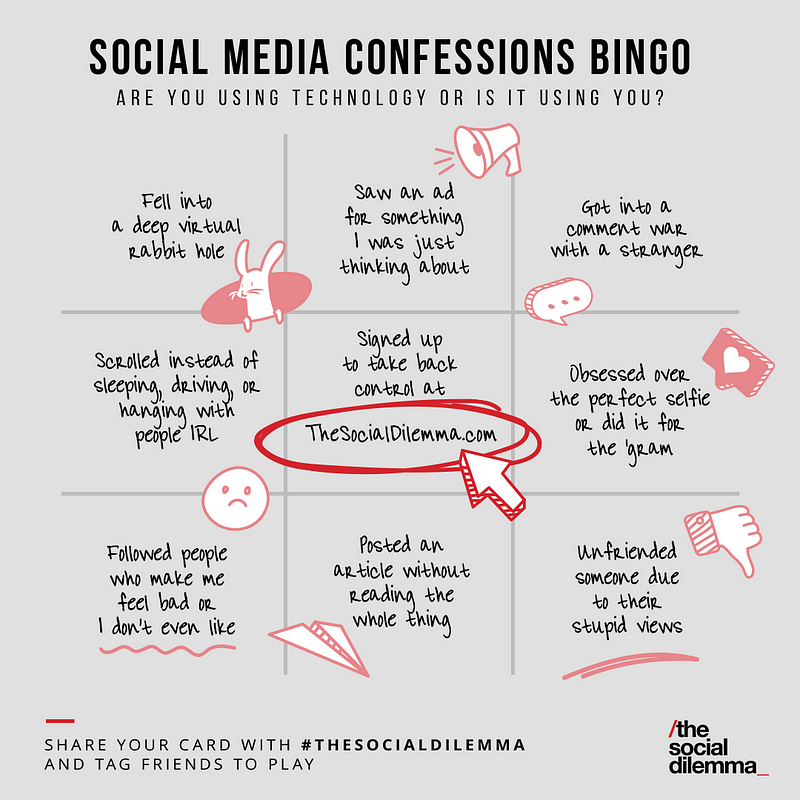
Poke around the film’s official website a bit and you’ll discover a variety of heavily-branded “resources” for “taking action,” all awash with a certain irony, including a fucking Bingo game (hosted on Google Drive, no less,) which the site actually suggests you post on your Instagram story! Also under the “Take Action” vertical are links to Moment CEO Tim Kendall’s tips for reducing your screen time, the “Data Detox Kit,” which advocates for Firefox as the private browsing solution (among an indigestibly huge link tree,) a “Join Now” button, and — most ironic of all — a link to download the “Ad Observer plugin,” in order to “share with researchers the ads you see on social media as they work to expose micro-targeting techniques & hold political advertisers accountable.” In other words, the very same data collection the film condemns, albeit for the “Online Political Transparency Project” instead of the greater adtech monstrosity.
No, it’s not a scam. Using The Markup’s shiny new Blacklight tool, I found thesocialdilemma.com to be entirely free of any malicious tracking aside from the inevitable accompaniment to their Google Drive embeds. (Here’s the report in full.) All at once, we can be virtually certain there is no malice in this particular destination, at least, which leaves… incompetence? I’m afraid so. It is not revolutionary to suppose that the people who conceived of these ruthlessly effective systems of adtech and figure out how to implement them in the real world — regardless of what they believe now, or then — that these folks should not be our first call when we’re searching for “solutions.” You know this, they know it, and they explicitly acknowledged it at least twice in the film, itself, and yet the fact of it remains.
Would you care to guess what Chapter 1 of the Digital Detox Kit is about? I can’t imagine you’d be correct… Under the heading “CONTROL YOUR SMARTPHONE DATA,” step 1 is literally just renaming your phone:
At some point, you may have “named” your phone for Wi-Fi, Bluetooth or both — or maybe the name was automatically generated during setup.
This means that “Alex Chung’s Phone” is what’s visible to the Wi-Fi network owner and, if your Bluetooth is turned on, to everyone in the area who has their Bluetooth on as well.
You wouldn’t announce your name as you enter a café, restaurant, or airport, so neither should your phone.
Now, I’ve always considered the ability to change a computer’s name an immense privilege. My first “real” computer’s name was Clementine, then there was Bertha, two Sophies (probably my favorite traditionally female name, so I excuse myself,) Silas, Linus, Uel, Jehoshaphat, Temba, Knot, and now Hildur. My iPhone 8 Plus’ name is Gravel. However, I realize that most users could care less, and I think that’s completely rational. Technically, suggesting you change your phone’s common name to that of “your favorite television character” (Hildur Odegard is my favorite character in Fortitude, so…) is not bad advice, even within its own privacy-centered argument, it’s just that it’s ridiculously low priority (or should be) compared with doing just about anything else along this vein. A conundrum is presented: I cannot imagine these people sitting down and seriously jotting down “change device name” as step 1 in their strategy, but I also cannot fathom an incentive for them to expend such effort facetiously or maliciously. Again, incompetence/ignorance is the only remaining explanation.
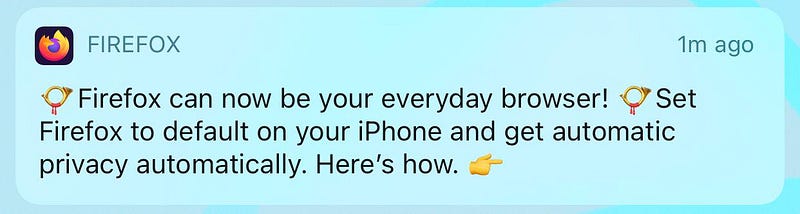
A notification I received while literally typing this out.
I have to backtrack, now, and confess that I did find an “Alternative Apps Centre” within the Data Detox Kit, which contains some genuinely smart recommendations like ProtonMail, Riot, Signal, and DuckDuckGo surrounding a bunch of privacy-enhancing browser extensions. However, the “detox” seems to have been lost at some point along the way. No amount of privacy (yes, I do think it’s hilarious that I can freely refer to “privacy” as a commodity with a positive quantity) can detoxify one’ social media addiction. The savvy reader notes the “Supported by Mozilla Firefox” badges all over the website and asks me “well, what did you expect?” My answer: something “more” than promotion, I suppose.
I suspect this is another case of don’t go to those who created the problem for the solution. More privacy is a more tangible vector upon which to “innovate” than simply putting down the fucking phone, but the interviewees in the film at least touched upon a very important insight in that regard: turn off all your notifications. I genuinely believe turning off all notifications is a good way to proceed, especially if this film (or anything else, for that matter) has made you feel uncomfortable about your relationship with your phone. I realized that I’d somehow allowed YouTube to clutter my notifications unconsciously for years, which is disturbing. In general, the apps who’s notifications I’d probably value the most (Bandcamp!) are the ones who use the feature the least/the most subtly.
Leaving your phone in a different room while you sleep is a good idea, though it seems a bit excessive when you could just turn it off, instead. (Displaced from your bed or stone dead, your chances of making use of your handset in an emergency are about the same, I’d wager.) I suspect it’s long overdue for a reboot, anyway. As far as “Email Addiction” goes, I suggest you first take an afternoon to go through your inbox and make use of GDPR’s greatest gift: the single-click opt-out, most often found in very small text in a given email’s footer. If you’re really serious, unsubscribe from even the newsletters you do read and make yourself resubscribe to them. Make use of your preferred email platform’s archives feature — or don’t — but clear everything from your inbox itself. Mark it all as read. Then, you’ll be ready to seek out other Email Wellness methodologies like the recently-trendy Inbox Zero.
If quitting social media cold turkey is not viable in your personal or professional life, a set daily time to check your notifications is a very good start. Yes, it’s okay to announce on Facebook that you’re taking a break from Facebook. There is a very good reason: accountability, to both yourself and your friends. If you are interested in the alternatives I mentioned before, genuinely contact me literally any time. My personal phone number is (573) 823–4380. I would be elated to discuss some of the services I’ve discovered with you.
My own advice on “privacy:” don’t worry about installing browser extensions, or using a different browser for that matter. Aside from a password manager, there is no need to download or install any additional software to protect your information. All the “privacy tools” you need are already present on your device, and they mostly consist of geolocation settings. If you’re an iOS user, you’ve already been confronted with them in the past few months. If you are still genuinely bothered by automated data collection unseen by human eyes, your only next step — if we’re really honest with ourselves — is figuring out how you’re going to go without the internet. Untracked browsing is no longer a realistic option.
still working on my post about Facebook. it's over 7500 words now...
sorry.
so far, I've used the word "Facebook" 135 times.
I'm pretty sure I'll have it up before the end of the week. and then I will never have to write about Facebook again...
10,000 words now... I think I need to take a break. definitely should be able to wrap up, polish, and publish tomorrow.
I COMPLETELY missed the Twitter hack... guess this means I'm already doing much better about not getting distracted.
well... I forgot to discuss VK, so it might actually be tomorrow before I get it up... I know hundreds of thousands of you were counting on this essay... I know you've spent three whole days now just refreshing my blog... I'm so sorry.
update:
so I was just about ready to conclude what I had to say about VK when it occurred to me that I should try searching for the original Russian expression of the word (ВКонта́кте,) which revealed a whole new story...
turns out, the only conversation about VK in American media, at least, is as a haven for Nazis who've been banned from Facebook. apparently their pilgrimage began around 2016. theatlantic.com/technology/arc…
this investigation by bellingcat (which is absolutely CHOCK FULL of Nazi imagery - please take care) examines a whole host of neo-Nazis who maintain profiles on both sites, and are just way more explicit about their ideology on VK. bellingcat.com/news/2020/02/1…
imo, the fact that NONE OF THIS was visible in search results for "VK" and "VKontakte" indicates that search engines are still kindof dumb.
to be honest, I have no idea what to do now. literally all of the Facebook alternatives I've argued for have an association with terrible people for one reason or another.
in some cases, it's the fault of the services, I agree. VK should definitely not be allowing some of those fucking images.
in Mastodon's, though, articles like this really let it down. Gab stole the PLATFORM - the SOFTWARE, not the network. the vast majority of instance admins came together within hours of the announcement to make sure their servers didn't federate with Gab. vice.com/en_us/article/…
and yet the headline still uses the term "home." something like this would've been way less misleading: "The Biggest Far-Right Social Network Moves to Nazi-Free Twitter Alternative's Platform."
very discouraged. as of this moment, retirement looks great.
what is the best answer, going forward, to combat the tendency for alt-right, neo-Nazi, and other hateful groups to seek refuge on "alternative social media?"
well, I took a break from writing about Facebook... to write about why I'm taking a break from writing about Facebook. extratone.vivaldi.net/covering-faceb…
WELL. I do love the burn in this comment:
"Complaining about how it operates is a little like going to someone’s house party because all the cool people were there and then complaining that the bathroom isn’t ergonomic or you wish their pool was deeper and had a diving board."